
Postpartum thyroiditis: diagnosis and treatment
After delivery, many women feel tired and have palpitations. Thyroid disease is a common but treatable condition.
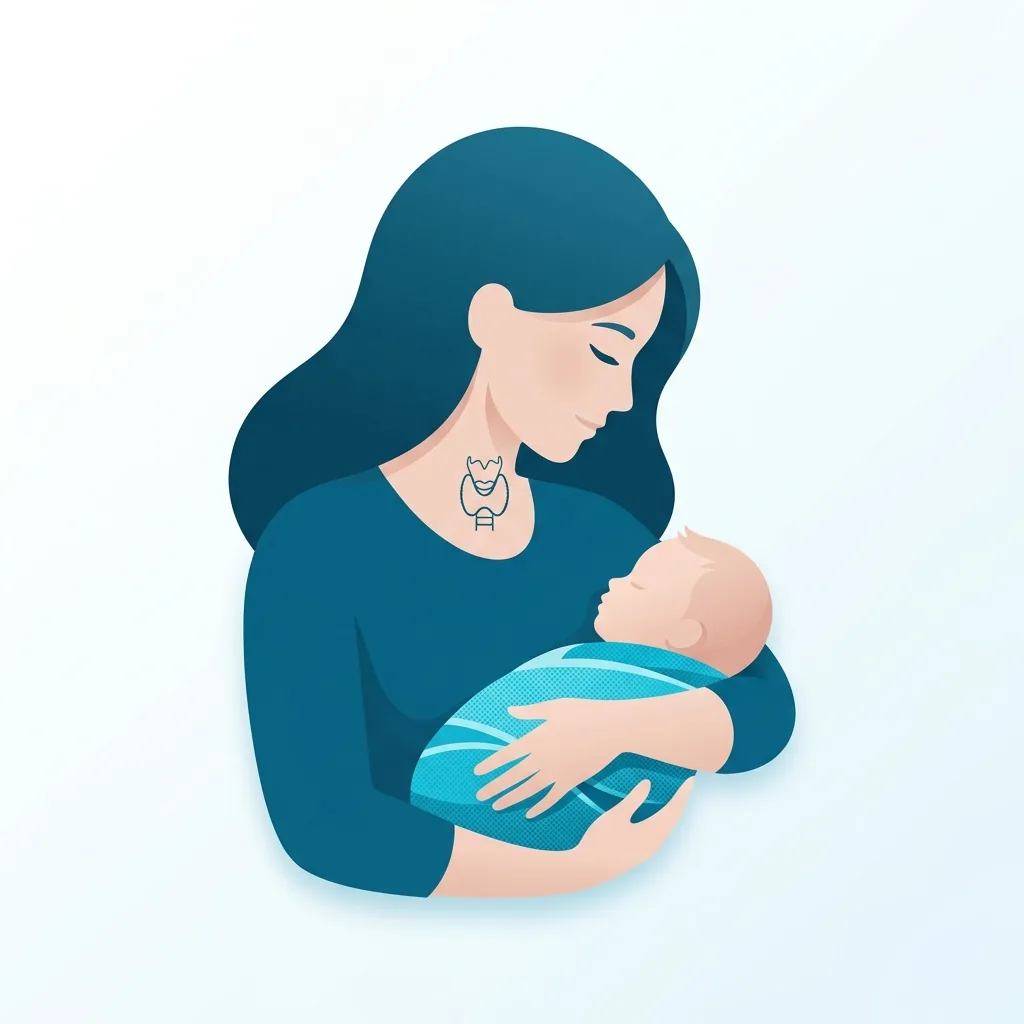
Definition and prevalence
Postpartum thyroiditis (PPT) is an autoimmune destructive inflammation of the thyroid that develops within 12 months after delivery (or after miscarriage/termination from the 20th week of pregnancy onward) in women whose thyroid function was normal during pregnancy. It occurs in about 5–10% of women worldwide and in up to 25% of women with type 1 diabetes. The most important risk factor is a positive anti-TPO (antibody) finding.
Disease course and monitoring
A classic biphasic course occurs in about 25% of women. This means a transient hyperthyroid phase first develops 1–6 months after delivery (symptoms may include palpitations, anxiety, weight loss, fatigue, and intolerance to heat), followed by a hypothyroid phase 4–8 months later (fatigue, cold intolerance, depression, weight gain, reduced milk supply, and constipation). In most women, this resolves spontaneously within 12 months. Others may experience only a hyperthyroid or only a hypothyroid phase. About 20–40% of women develop permanent hypothyroidism within a few years.
Blood tests
The main tests are thyroid function tests (TSH, fT4, and fT3) and anti-TPO antibodies. In the hyperthyroid phase, TSH is low and fT4 and fT3 are elevated. In the hypothyroid phase, TSH is high and fT4 is low or low-normal. Anti-TPO is positive in 70–80% of cases. TSI is negative, which is a major difference from Graves' disease. When the diagnosis is unclear, a radioactive iodine uptake scan may be used (only in non-breastfeeding women); uptake is very low in thyroiditis but high in Graves' disease.
Imaging studies
On thyroid ultrasound, thyroiditis (especially autoimmune thyroiditis) often shows a heterogeneous and hypoechoic structure, which may be accompanied by reduced or normal blood flow on Doppler. This is the opposite of Graves' disease, where the thyroid is usually hypervascular.
Treatment
The hyperthyroid phase of thyroiditis is usually temporary and is not treated with antithyroid drugs (thionamides). For symptomatic treatment, non-selective beta-blockers such as propranolol (10–40 mg 2–3 times a day) are used to relieve tachycardia, tremor, and anxiety. Selective beta-blockers (e.g., bisoprolol or metoprolol) can be used as an alternative and are also suitable during pregnancy and breastfeeding. In hypothyroidism, levothyroxine is started in the following cases: TSH > 10 mIU/L, TSH 4–10 mIU/L with marked symptoms, during pregnancy, while planning pregnancy, or during breastfeeding. The usual starting dose is 25–75 µg per day, depending on the patient's age, body weight, and cardiovascular risk. Treatment is typically continued for 6–12 months; the dose can then be gradually reduced or stopped to assess whether the hypothyroidism is permanent or transient. TSH is usually checked 6–8 weeks after starting treatment or changing the dose.
Follow-up
During active postpartum thyroiditis (PPT), TSH should be checked every 4–8 weeks until thyroid function has stabilized or a stable replacement dose has been reached. After recovery, TSH monitoring is recommended at least once a year for 5 years, because approximately 20–40% of patients develop permanent hypothyroidism over time. In a woman with a history of PPT, thyroid function should be checked before a new pregnancy and in early pregnancy, since the risk of recurrence and dysfunction is higher.
Medical disclaimer. This article is for general educational purposes and does not replace consultation, diagnosis or treatment by a qualified healthcare professional. Always discuss your individual situation with your own doctor.