
Hashimoto's Thyroiditis: Symptoms, Causes, Diagnosis, and Treatment
Hashimoto's thyroiditis is the most common cause of hypothyroidism.
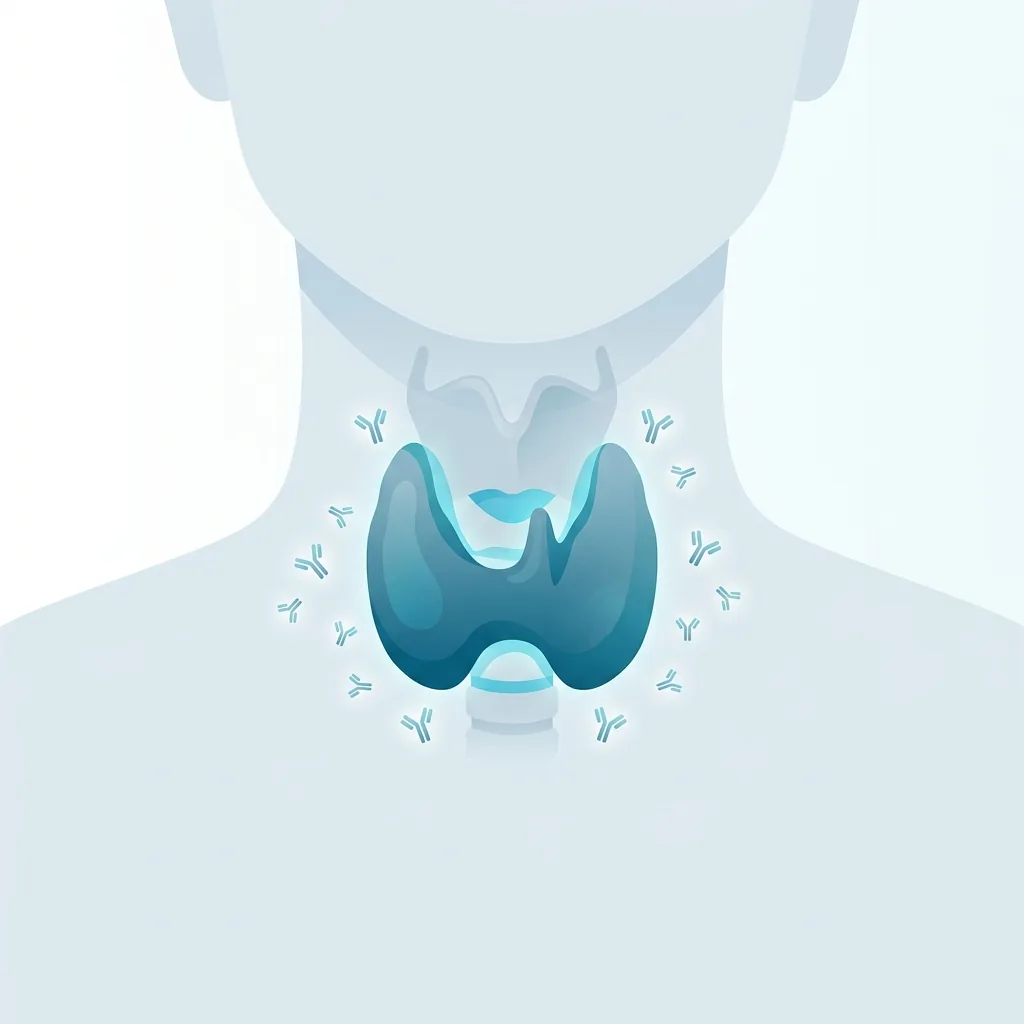
What is Hashimoto's disease?
Hashimoto's thyroiditis (also known as chronic lymphocytic thyroiditis or chronic autoimmune thyroiditis) is an autoimmune disease that slowly destroys the thyroid gland. It is the most common cause of hypothyroidism. Women are affected about 7 to 10 times more often than men. It usually starts between ages 30 and 50, but it can occur at any age, even in children.
Symptoms
Early Hashimoto's thyroiditis is often without symptoms. Once the thyroid stops working properly, symptoms of hypothyroidism appear: persistent fatigue, intolerance to cold, unexplained weight gain, dry skin, loose hair and brittle nails, constipation, irregular menstrual periods, muscle pain, joint stiffness, depression, difficulty concentrating, slow heart rate, and swelling around the eyes. In women trying to conceive, Hashimoto's combined with untreated hypothyroidism can manifest as infertility or recurrent miscarriages.
What causes it and what increases the likelihood of developing it
Autoantibodies against thyroid peroxidase (anti-TPO) and thyroglobulin (anti-TG) are what cause Hashimoto's disease. It is not entirely clear what triggers the disease, but several risk factors are known. These include female sex, a family history of thyroid or other autoimmune diseases (such as type 1 diabetes, vitiligo, celiac disease, rheumatoid arthritis), pregnancy or recent childbirth, high iodine intake, smoking cessation, low dietary selenium levels, and infections caused by certain viruses. Genetic predisposition (HLA-DR3, HLA-DR5) is a key factor.
Blood tests
The main tests are TSH, free T4 (fT4), and anti-TPO. In subclinical disease, TSH is above the normal range while fT4 is still within normal limits. In overt hypothyroidism, TSH is high and fT4 is low. A positive anti-TPO (typically >5.6 kIU/L) confirms that the cause is autoimmune. Anti-TPO values can be in the hundreds or thousands. Thyroglobulin antibodies (anti-TG) are helpful when anti-TPO is negative. Additional tests commonly checked include a complete blood count, ferritin, vitamin B12, 25-OH vitamin D, lipid panel, and HbA1c. This is because untreated disease often causes other problems and dyslipidemia (when TSH is high and fT4 and fT3 are low).
Imaging studies
Thyroid ultrasound is the imaging test of choice. In Hashimoto's thyroiditis, the parenchyma appears heterogeneous and hypoechoic. Small nodules may also be present. In the later stages of the disease, the thyroid becomes atrophic and fibrotic. Nodules found on ultrasound should be classified according to a TIRADS system (EU-TIRADS or ACR-TIRADS), and a fine-needle aspiration biopsy should be taken if suspicious.
Treatment
Levothyroxine is used to treat hypothyroidism. It is taken once a day in the morning, 30 to 60 minutes before eating or drinking coffee, and two hours before calcium or iron supplements. Adults typically need 1.6 µg/kg of body weight per day to replace the missing hormone. Elderly patients and people with heart disease should start with a lower initial dose of 25–50 µg, increased toward the target dose in 50 mcg increments. For adults, the normal TSH range is usually between 0.4 and 4.0 mIU/L. In people over 70, the range is 0.4 to 7 mIU/L. Subclinical hypothyroidism is treated when TSH is persistently above 7 mIU/L in adults, above 9 mIU/L in the elderly, or above 2.5 mIU/L during pregnancy. There is no cure for the autoimmune process itself; lifelong hormone replacement therapy is the only treatment.
Follow-up and doctor visits
Check TSH (and fT4) 2–3 months after starting levothyroxine or changing the dose. Once the dose is stable, check TSH every 12 months. If a woman becomes pregnant, the dose must be increased immediately by 25–50%. During the first half of pregnancy, TSH should be rechecked every 4–8 weeks. In patients with positive anti-TPO antibodies but normal TSH, it is recommended to check thyroid function once a year, since about 3–5% of cases progress to overt hypothyroidism each year.
Medical disclaimer. This article is for general educational purposes and does not replace consultation, diagnosis or treatment by a qualified healthcare professional. Always discuss your individual situation with your own doctor.